
Without a Will What Happens: Essential Guide for 2025
Picture this: You kick the bucket tomorrow. Your family’s left with chaos, lawyers, and your weird uncle fighting over your stuff. If you’ve ever wondered, without a will what happens in 2025, brace yourself. Spoiler: The law doesn’t care about your secret wishes or who actually deserves your PlayStation.
This guide will roast you into responsibility, breaking down intestacy laws, probate headaches, family drama, and how to dodge the mess. Want control, peace of mind, and fewer after-death surprises? Keep reading, or risk letting the state decide who gets your socks.
Understanding Intestacy: What It Means to Die Without a Will
So, without a will what happens when you finally kick the bucket? Welcome to the charming world of intestacy, where your state’s laws—not your Netflix queue, not your group chat, not even your estranged cousin’s TikTok—decide who gets your stuff.
The Legal Definition of Intestacy
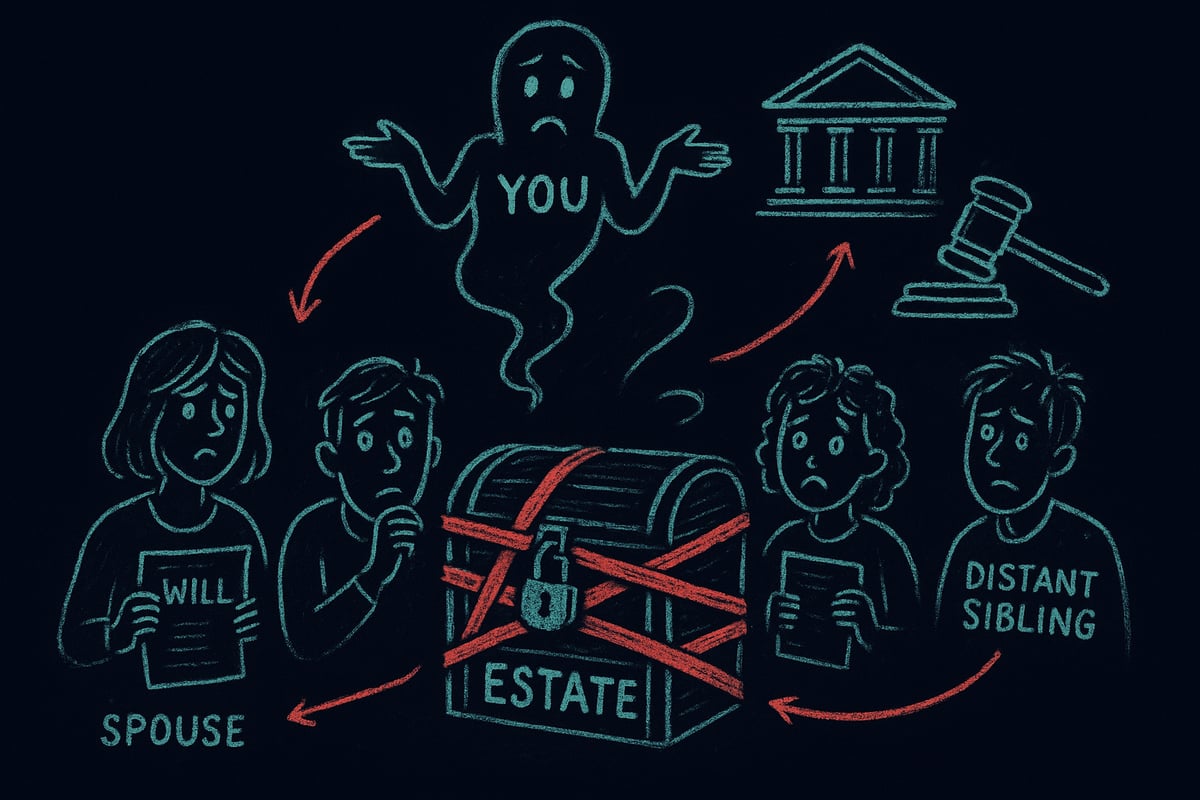
Intestacy is what lawyers call the situation when you die and, surprise, you forgot to leave a will. So, without a will what happens? Your assets freeze faster than your browser after a Windows update. The court steps in, following intestacy laws that change depending on your state (thanks, 2025 legal updates).
Here’s the kicker: intestacy does not care about your last-minute wishes or your secret plans to leave everything to your dog. If you wanted your beloved nephew to inherit your vintage comic collection but never wrote it down, guess what? Your estranged sibling could get it all. The law only cares about bloodlines and paperwork, not who actually liked you.
How Intestate Succession Works in 2025
If you want to know without a will what happens next, buckle up. States have a pecking order for inheritance: spouse, then kids, then parents, then siblings, then that weird uncle you never met. Single? Your assets go to your kids, or your parents if you have no kids, or your siblings if your parents are gone. No close family? Your stuff might land in the lap of a distant relative or even the state.
Let’s talk marriage and partnerships. If you’re married, your spouse usually gets the lion’s share, but in blended families, your assets could be split between your spouse and your kids from other relationships. Live in a community property state? Half your stuff might not even be yours to give away. Domestic partnership? Some states are basically saying, “Never heard of her.”
Here’s a quick breakdown:
| Inheritance Type | Per Stirpes (by branch) | Per Capita (by head) |
|---|---|---|
| How it works | Each branch of the family gets a share. If a child dies, their kids inherit their portion. | Each living heir gets an equal share, regardless of branch. |
| Example | California | Tennessee |
Oh, and domestic partners? Many states still don’t think they count. If you want a partner to inherit, you’d better put it in writing or risk seeing your assets go to someone you unfollowed years ago.
For a deeper dive into how you can actually prevent this circus, check out this guide to safeguard your estate.
Real-World Consequences of Intestacy
So, without a will what happens to your family? Chaos, mostly. The probate process drags on for months, sometimes years, while your loved ones argue over who gets what. The court decides who becomes guardian for your kids, and spoiler alert—it might not be the friend you trusted most.
Probate fees are no joke. In California, they can eat up $11,000 of a $500,000 estate, and that’s just for starters. Family feuds over grandma’s jewelry? Almost guaranteed. Your children’s future decided by a stranger in a robe? That’s the risk. The law doesn’t care about family drama or your group text. Only a will does.
The Probate Process: What Happens to Your Estate Without a Will
Picture this: you finally kick the bucket, and your family is left with the ultimate parting gift—legal headaches. If you’re wondering without a will what happens, let’s just say, the system gets first dibs. Here’s your anti-glam guide to the probate circus that awaits your estate.
Step-by-Step: How Probate Works Without a Will
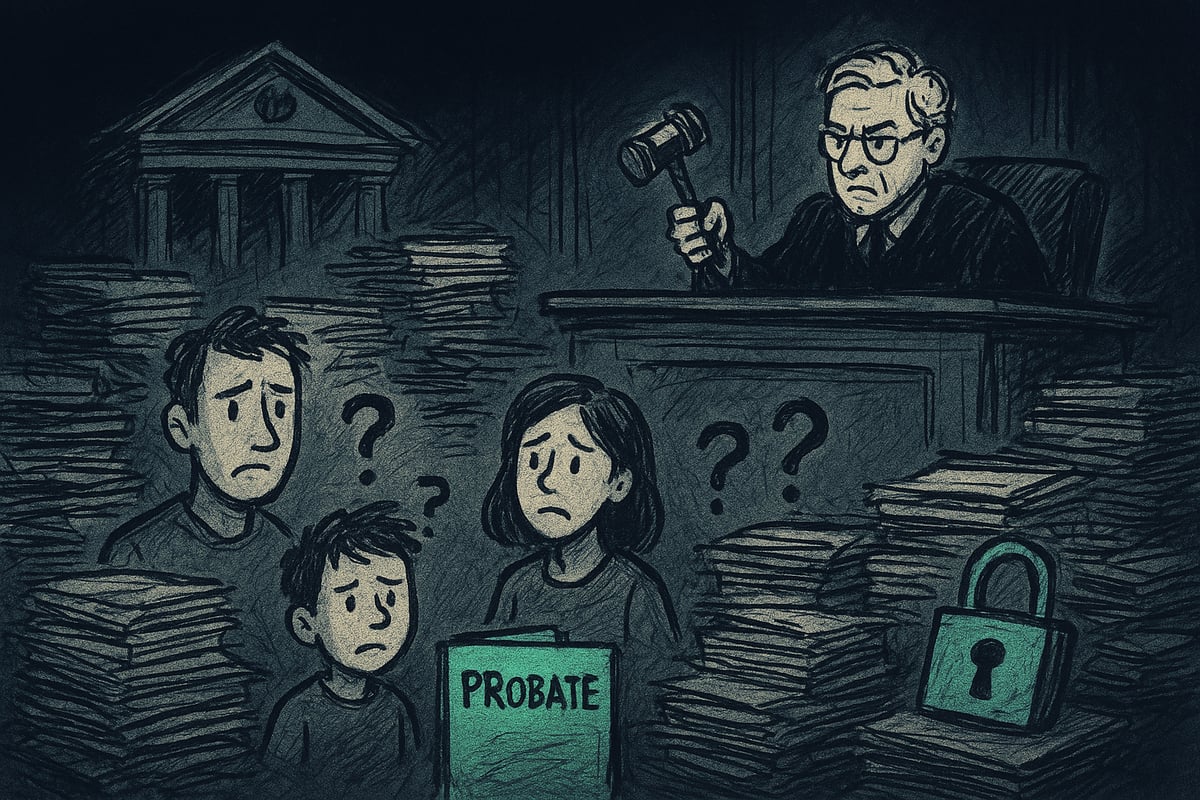
So, without a will what happens first? The court steps in and appoints a personal representative, usually the person least likely to know where your secret Bitcoin wallet is hidden. Here’s the greatest hits playlist:
- All assets are frozen, then inventoried (yes, even your Beanie Babies).
- Creditors and debts get paid off before your family sees a penny.
- Whatever scraps are left are handed out according to state intestacy law, not your Netflix playlist of “favorite people.”
- The entire mess becomes public record. Privacy? Not for your heirs.
- Probate costs add up fast: state fees, attorney bills, and months (or years) of waiting.
Imagine your spouse’s bank account frozen, bills piling up while your loved ones fill out forms instead of grieving. In some states, probate on a $500,000 estate can eat up $11,000 or more. And yes, your nosy neighbor can read all about it.
Want to see just how wild probate law got in 2025? Check out the American Bar Association’s Probate Updates for legislative plot twists.
The Impact on Assets, Property, and Taxes
Let’s play a game: what actually goes through probate? Joint accounts or assets with named beneficiaries usually skip the circus. But for everything else, without a will what happens is the court decides if your family gets the house or just the mortgage.
- Real estate: Joint tenancy with survivorship? Your co-owner might keep it. Tenants in common? Probate city.
- Federal estate tax: 40 percent on estates over $11.58 million. State inheritance taxes? Up to 16 percent in some unlucky spots.
- No will, no marital deduction magic. Your spouse could lose big.
So, if you wanted to leave your vintage Camaro to your dog and the rest to your ex’s arch-nemesis, tough luck.
Guardianship and Minor Children
If you have kids under 18, here’s a fun twist: without a will what happens is the court picks their guardian. Not you. That cousin who eats glue? Could be their new parent.
Assets for minors are managed by a court-appointed guardian until they turn 18. Does your teenager have the maturity to handle $100,000? The court thinks so. Mismanagement, legal fees, and family drama are all possible guests at your “after party.”
Bottom line: unless you want the state to script your family’s future, don’t leave probate to chance.
Who Gets What? Intestate Succession by Family Situation
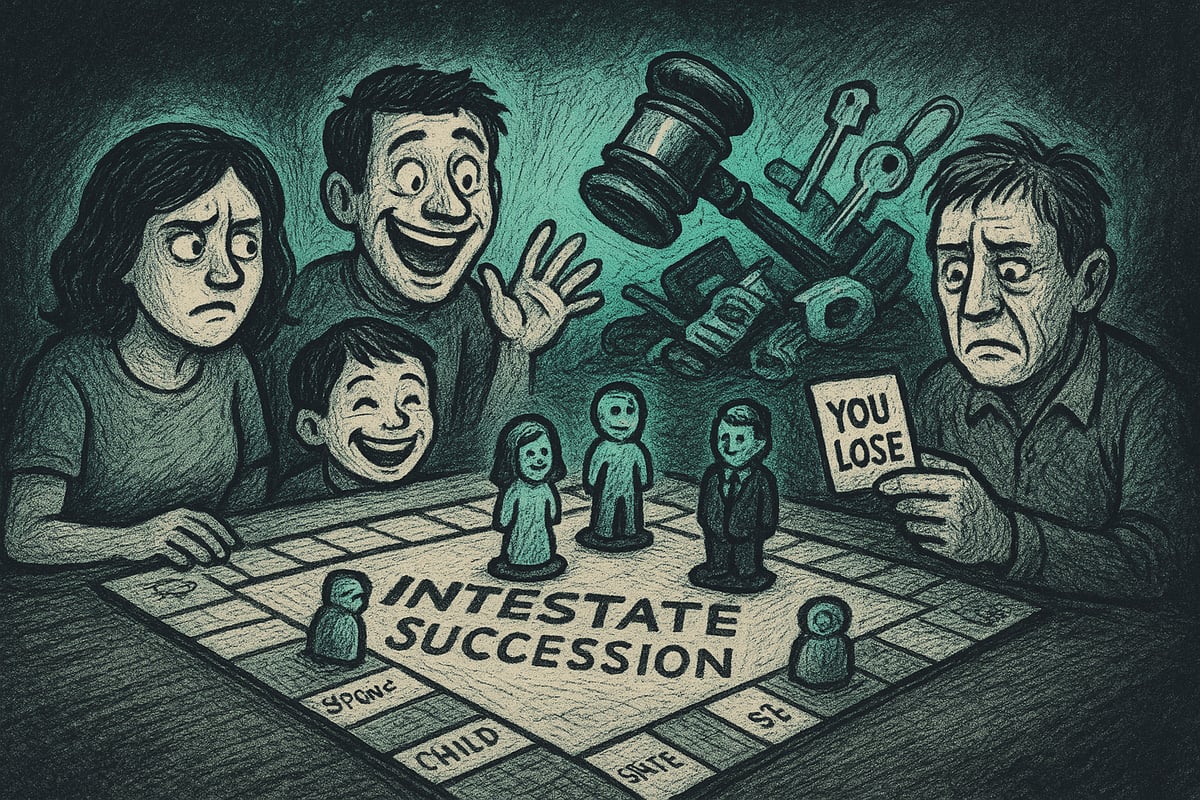
Imagine dying and leaving your family to play a real-life version of “Who Wants to Be a Beneficiary?” Spoiler: without a will what happens is the state steps in, and your actual wishes are about as useful as a screen door on a submarine. Let’s break down who gets your stuff when you don’t bother to plan, and why your favorite cousin (or secret soulmate) probably won’t see a dime.
If You’re Single
Ready for a family reunion you never wanted? If you die single and without a will what happens is your assets march down a legal assembly line: first to your kids (if you have any), then your parents, then siblings, then that cousin you haven’t seen since Y2K. Got no close kin? The state might just treat itself to your leftovers.
- Your best friend? Gets zip.
- That loyal roommate? Not a chance.
- Estranged uncle? Jackpot.
If you want to see how the cold machinery of inheritance laws really works, check out this comprehensive guide that exposes how the system ignores your actual relationships.
If You’re Married or in a Domestic Partnership
Marriage: the legal fast pass to inheritance… unless you live in a state that’s stuck in the 1800s. Usually, your spouse scoops up most or all of your assets. But wait, blended families, community property states, and unrecognized domestic partnerships can complicate the party.
If you have kids from another relationship, they may split the loot with your spouse. If you’re in a domestic partnership, without a will what happens is often your partner is left with nothing, especially in states that don’t recognize your relationship. Romantic, isn’t it?
If You Have Children or Dependents
Kids are adorable, until the court decides which one of them (or their guardian) gets to blow your inheritance on NFTs. The division depends on your marital status and your state’s rules. Minor or incapacitated children get their share, but the court picks who manages it—sometimes until they’re 18 and still think ramen is a food group.
Without a will what happens is your legacy is managed by strangers, not you. If your idea of responsible parenting includes letting the court decide your child’s financial fate, you’re nailing it.
Special Circumstances: Stepchildren, Adopted Children, and Unmarried Partners
Stepchildren? Unless you officially adopted them, they’re out. Adopted kids are treated like biological children, so they’re in. Unmarried partners? Sorry, the law gives them the cold shoulder. If you think your “life partner” will inherit, the joke’s on both of you.
Financial and Emotional Costs of Dying Without a Will
So you’ve put off writing a will, figuring you’ll get to it someday. Let’s talk about the real price tag of that “someday” attitude. The financial and emotional fallout of dying intestate is the stuff of family nightmares—unless your dream is to make your relatives hate each other and pay lawyers more than you ever tipped a bartender.
Delays, Disputes, and Legal Fees
Let’s start with the main event: probate. When you die without a will what happens is your family gets front-row seats to the slowest, most expensive show in town. Probate drags on for 6 to 24 months, sometimes longer if your family can’t agree on who deserves your vintage vinyl or grandma’s necklace.
Legal fees? They’re not shy. Attorney and court costs can eat up $11,000 or more from a mid-sized estate. That’s before anyone even sees a dime. Family members often lawyer up, turning your legacy into a courtroom drama nobody wanted. If you’re wondering if it’s cheaper to hire a lawyer for writing a will up front, spoiler: it absolutely is.
Emotional Toll on Loved Ones
Here’s the real kicker: without a will what happens is your family gets a side of stress with their grief. Siblings squabble, parents panic, and everyone wonders what you actually wanted. The process drags on, leaving your loved ones in limbo, unable to move forward or even pay the bills.
No will means the courts could stick your kids with a guardian you never met, just because that’s what the law says. Closure? Forget about it. The legal system isn’t known for its warm hugs or quick resolutions.
Loss of Control Over Your Legacy
Think you’ll haunt your family to make sure your stuff goes to the right people? Good luck. Without a will what happens is state law takes the wheel, and your actual wishes get ignored. Charitable gifts, promises to friends, or that secret stash for your favorite niece? All gone, replaced by a legal formula that couldn’t care less about your intentions.
Assets might end up with estranged relatives or, if you’re really unlucky, the state itself. So unless you want your ex to inherit your PlayStation or your goldfish to wind up in the hands of your least favorite cousin, don’t let the government write your story.
How to Prevent Intestacy: Protecting Your Family and Assets in 2025
So, you’re still alive and reading this. That’s one point for Team Responsible Adult. But let’s get real—without a will what happens is pure chaos for your family, your assets, and your posthumous reputation. Preventing intestacy is less about legal mumbo jumbo and more about not leaving your loved ones in a mess worthy of a reality TV episode.
Creating a Legally Valid Will: Steps and Best Practices
Let’s be honest—without a will what happens is nothing short of a death party your family didn’t want to attend. The fix? Draft a will. Here’s your cheat sheet:
- Pick an executor (the boss who handles your stuff)
- Name guardians for your kids (so the court doesn’t play matchmaker)
- Spell out who gets your PlayStation, your cat, or your weird mug collection
- Sign it in front of witnesses (2025 rules: most states want two adults, no pets, sorry)
- Update your will after major life events, or whenever you get the urge to be slightly less irresponsible
Remember, your will is only legit if you follow your state’s requirements. If you skip these steps, you’ll be starring in the next episode of “without a will what happens.”
Alternatives and Enhancements: Trusts, Beneficiary Designations, and More
Wills are great, but there’s more to the anti-drama toolkit. Want to avoid probate? Try a living trust for your home or investments. Designate beneficiaries on your bank accounts and retirement funds—those skip the courtroom circus entirely.
Joint ownership on real estate or accounts can also keep things simple. And if you want to cover all your bases, set up powers of attorney and healthcare directives so nobody’s guessing at your wishes.
For the latest legal updates, check out the 2024 Year-End Estate Planning Advisory, which breaks down new estate planning rules and tricks. Because if you don’t stay current, without a will what happens is the law gets the last laugh.
A Modern Solution: Killswitch for Fast, Affordable Will Creation
Want to avoid lawyers, paperwork, and the existential dread of estate planning? Killswitch lets you create a legally valid will online for $69—less than your last bar tab. It’s quick, valid in all 50 states, and comes with unlimited free updates for when your life gets messy.

No legal jargon. No fancy mahogany desks. Just you, your laptop, and a foolproof way to stop asking “without a will what happens” and start protecting your family. If you’re not satisfied, there’s a money-back guarantee. Congrats! You’re now slightly less irresponsible than you were 10 minutes ago.
Key Takeaways and Frequently Asked Questions
So, without a will what happens? Spoiler alert: the state gets to play “Who Wants to Be an Heir?” with your stuff, your kids, and your legacy. Your actual wishes? Sorry, those get buried right next to you. If you want your collection of Star Wars Pez dispensers to go to your best friend instead of your second cousin twice removed, you’re out of luck.
Frequently Asked Questions
| Question | Answer |
|---|---|
| What happens to my debts? | Debts get paid off before anyone gets a dime. No, your nephew can’t keep your car if you still owe on it. |
| Who runs the show if I don’t have a will? | The court appoints an administrator, usually the family member who draws the short straw. |
| Can my friends or partner inherit anything? | Not unless you put it in writing. Otherwise, your BFF gets zip. Your partner? Might as well be a stranger, especially in states that exclude them. |
| Do state laws differ on inheritance? | Oh, absolutely. For example, California’s 2025 Inheritance Law Changes make it easier to transfer some homes without probate, but most states still stick to the old “let’s make it complicated” routine. |
What Should I Actually Do Next?
Let’s be real: without a will what happens is a mess only lawyers and estranged relatives enjoy. Review your estate plan every year, and after every major life event. Stop procrastinating, write a will, and save your family from the world’s worst episode of “Family Feud.” Your legacy, your rules—unless you leave it up to the state.
Alright, let’s be honest—you’re going to die someday. Pretending you’re immortal is adorable, but your family will not find it cute when they’re stuck in probate hell arguing over your vintage Beanie Babies and who gets your half-built Lego Death Star. You read all about the chaos that happens when you don’t have a will, and yet, here you are, still rolling the dice with your legacy. Why not do something wildly responsible for once? Give your future ghost some peace of mind and make sure your stuff (and your people) end up where you actually want. Start My Will Now